


Siding
Replacement in
Woodstock, GA.
“I called three roofing companies and went with North Metro because Dylan was honest.”
 GAF Certified Plus™
 A+ BBB Rating
 Licensed & Insured
GAF Certified Plus™. BBB Accredited Business with an A+ rating. 5.0 rating on Google.

Licensed & InsuredLocally Owned
Good-Looking Siding
Can Still Hide Rot.
Siding is what keeps Georgia weather off your framing and insulation. When it fails, water gets in, and in this climate it does damage fast.
We see it all the time around Woodstock and Canton: siding that looked fine from the street but was hiding rotted OSB and mold behind it. If your siding is warping, cracking, or pulling away at the seams, the real damage is usually underneath.
Siding Options That
Make Sense Here.
We install James Hardie, LP SmartSide, and vinyl, and we'll recommend what fits your house and budget and holds up to Georgia heat and humidity.
Fiber Cement Siding
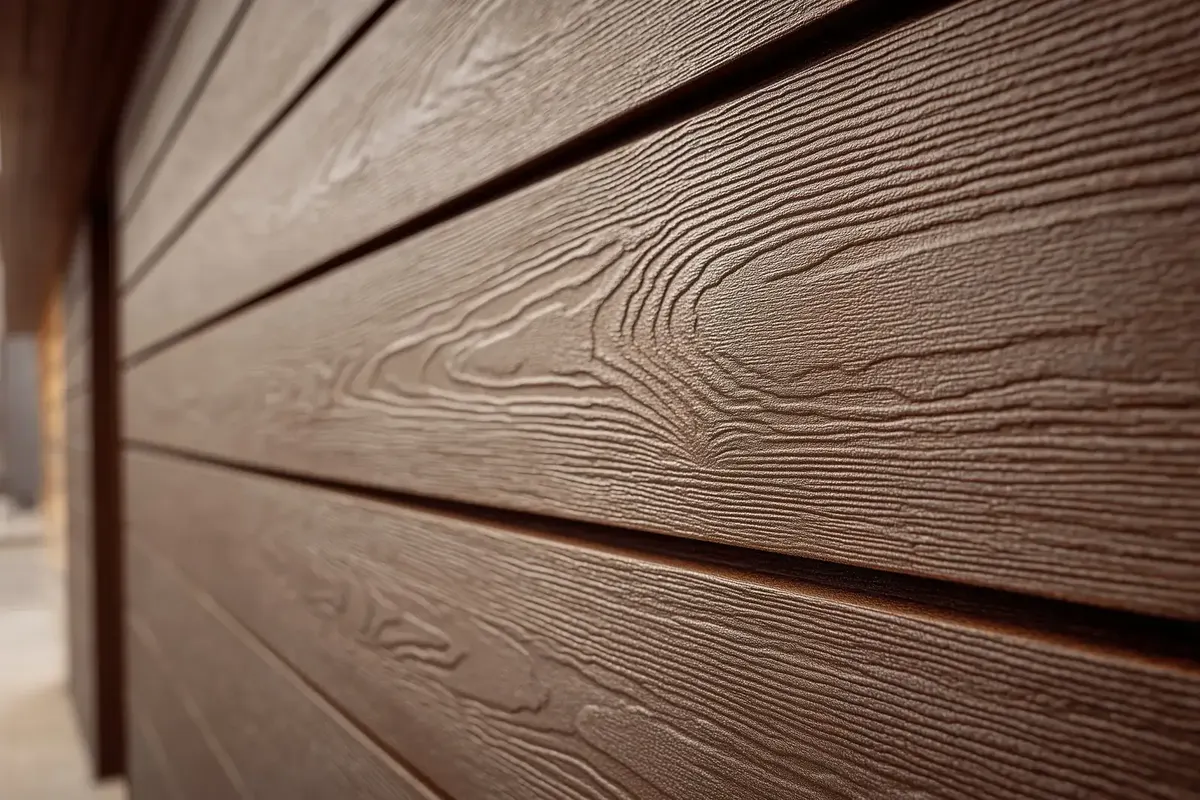
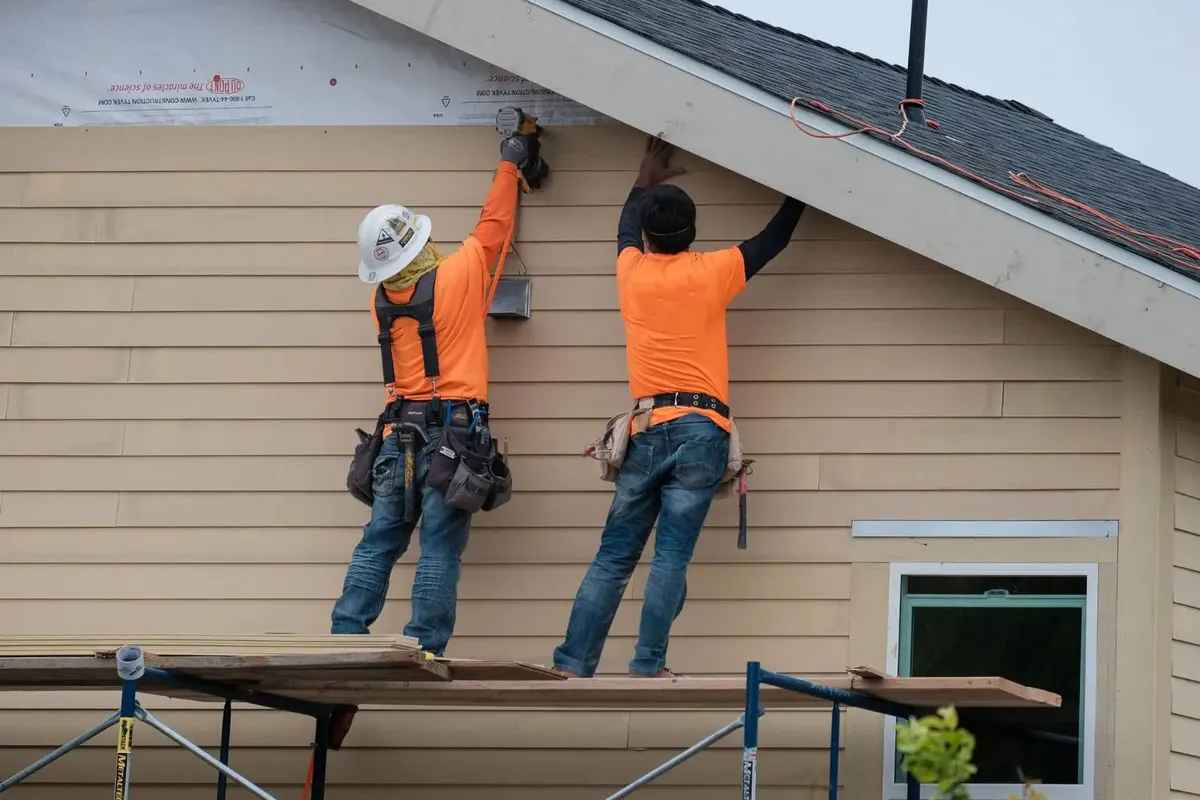
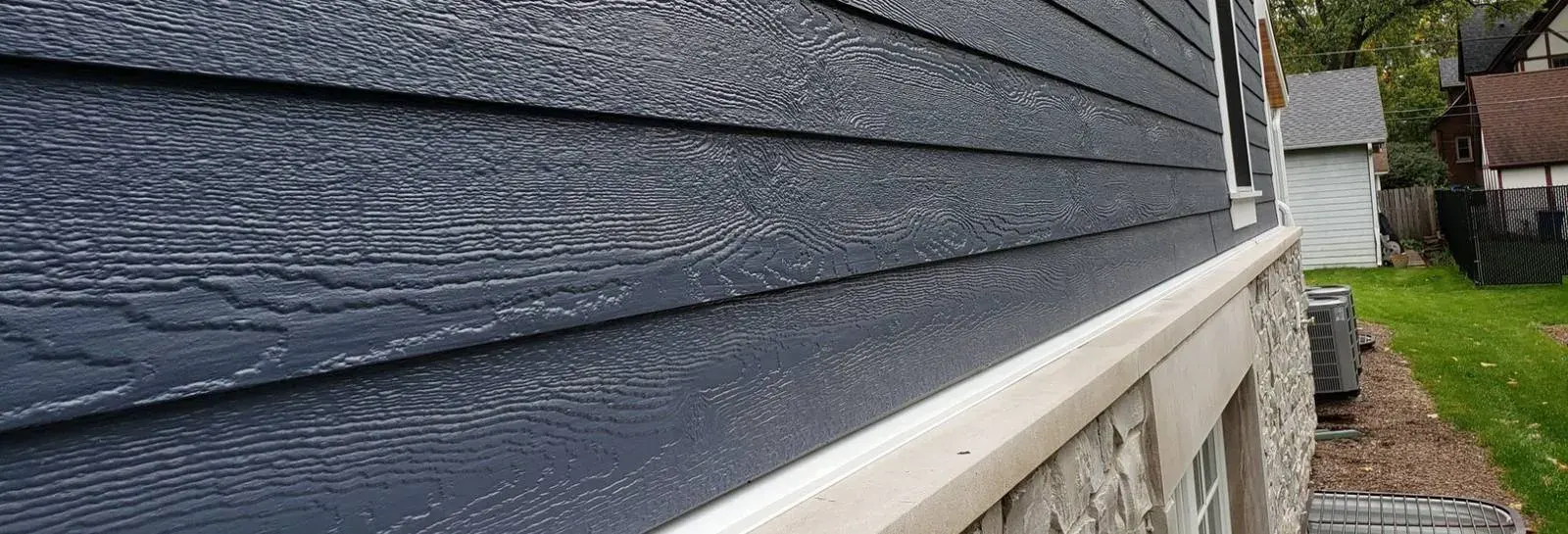
James Hardie HardiePlank is the standard for a reason. It won't rot, won't burn, won't attract woodpeckers, and it handles Georgia humidity without swelling the way wood and hardboard do. We install it to Hardie's instructions, which is what the warranty is built on: flashing behind butt joints instead of caulk on ColorPlus boards, sealed cut edges, and a 1 to 2 inch gap where the siding meets a roof.
Board & Batten
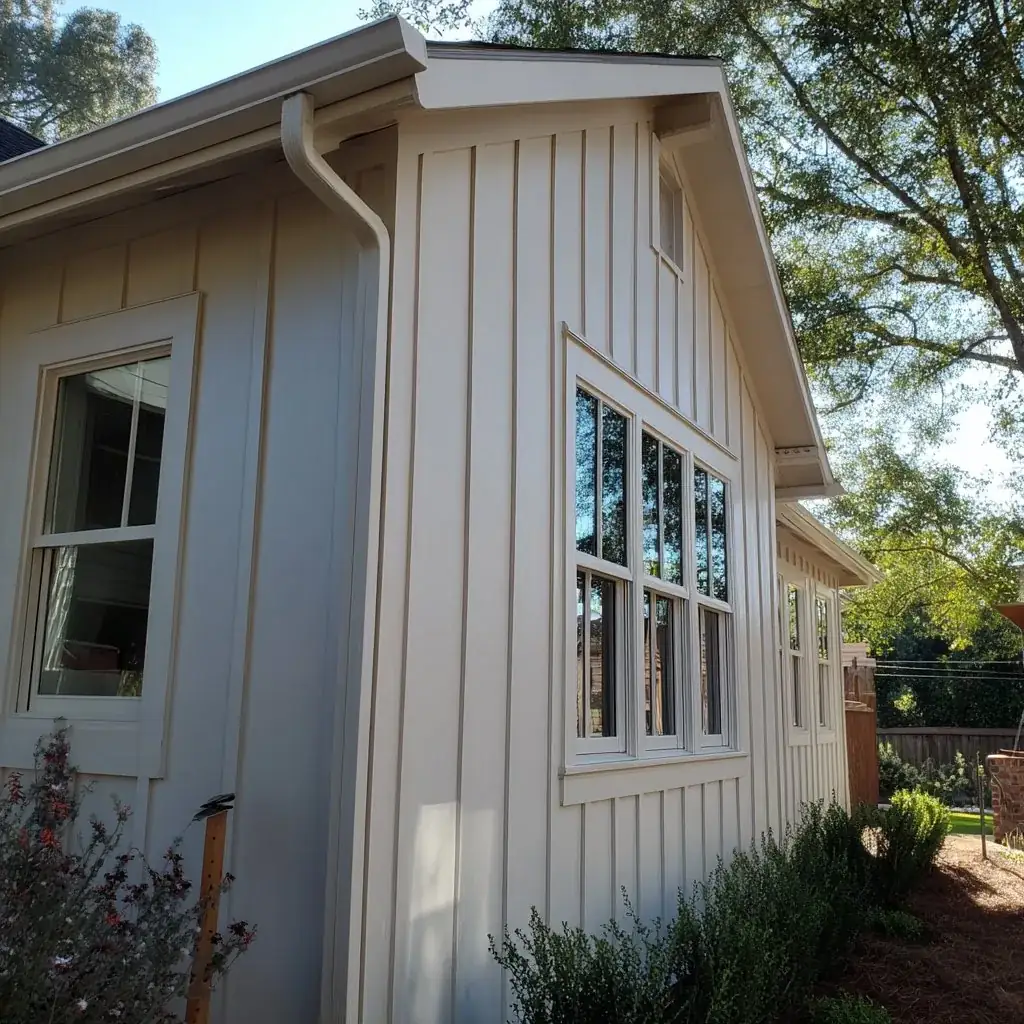
Vertical board and batten changes the whole look of a house, and it suits a modern farmhouse as well as a traditional one. We install it in fiber cement or LP SmartSide and keep the batten spacing even and the lines straight across the wall.
Thick-Gauge Vinyl Siding
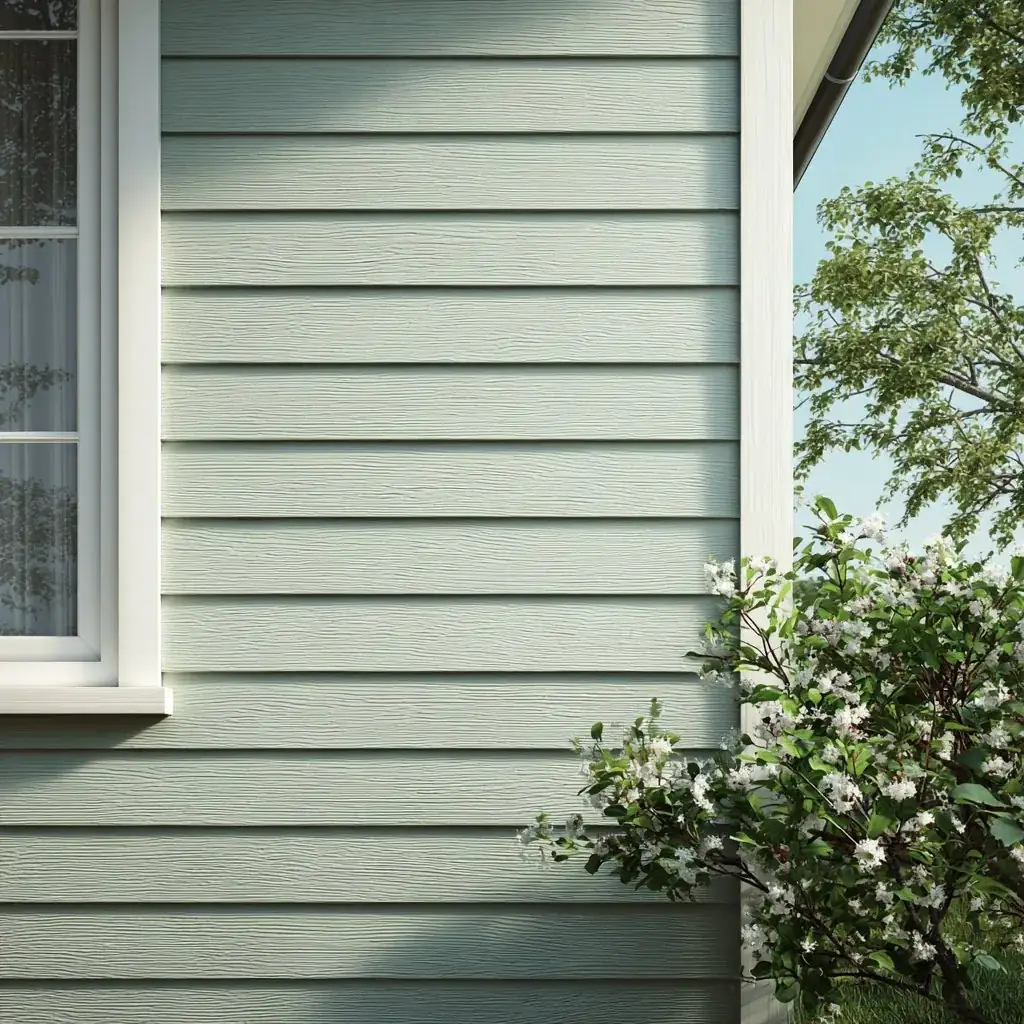
We install thick-gauge double-4 and dutch lap vinyl from CertainTeed and Norandex. It's heavier than builder-grade vinyl and looks much more like painted lap siding. Vinyl won't rot, doesn't need paint, and it's the most cost-effective way to re-side a home. Like any siding, it needs good housewrap and flashing behind it. We insulate behind it when the budget allows and use J-channel, starter strip, and utility trim the way the manufacturer specs it.
“Had some siding and roofing repairs done on our older house. They were very honest about what needed to be done. Very quick and thorough.”
Signs Your Siding
Needs Replacing.
Most siding doesn't fail all at once. It's the slow stuff, like a bulge here or some discoloration there, that points to bigger problems behind the wall.
“Looks like a completely different home now.”
Warping or Buckling
Panels that wave, bow, or pull away from the wall usually mean moisture is trapped behind them.
Cracking or Splitting
Hairline cracks in fiber cement or vinyl let water in around the nails. If one panel has cracked, it's worth checking the ones next to it.
Fading & Chalking
Heavy fading, or a chalky film that rubs off on your hand, means the sun has broken down the finish. Paint won't stick well to chalky siding.
Mold, Mildew, or Rot
Green or black growth near the bottom courses or around windows means those spots stay wet, and the wall behind them may too.
Where Siding Rot
Usually Starts.
A lot of the rot we open up behind siding starts where a roof runs into a wall. Water runs down the roof along the wall, and at the bottom it needs one small piece of metal to send it into the gutter. That's roofing work as much as siding work, and it's the first place we look.
- Rain runs down the roof along the wall, over the step flashing.
- At the bottom nothing turns it, so it runs down the wall behind the end of the gutter.
- It soaks the sheathing behind the siding, often for years before it shows.
- The same water runs down the roof along the wall.
- The kickout, a small angled piece of metal, turns it into the gutter.
- The wall below stays dry.
- Kickout flashing where a roof edge meets a wall. Georgia's building code requires one, but it wasn't required until 2009, so plenty of older houses around here don't have one.
- A gap between the siding and the roof. Siding should stop an inch or two above the shingles, as James Hardie's instructions call for. When it runs tight to the roof, the bottom edge soaks up water every time it rains.
- Clearance from the ground. Siding should sit about 6 inches above the dirt and mulch, with the ground sloping away from the house. Mulch piled against the wall keeps the bottom boards wet, and termites can travel up behind siding out of sight.
- Flashing over windows and doors. Windows and doors need flashing over the top, not just caulk. Caulk alone is a common reason we find rot under a window.
If your roof is being replaced, that's the easiest time to add a kickout, since it goes in with the step flashing. See what a roof replacement includes.
What's On Your
House Now?
The siding a house was built with says a lot about how it will fail, and whether a repair can match it.
Hardboard
Swells and flakes at the bottom edge.
Hardboard is pressed wood fiber made to look like painted lap siding. Once water gets past the paint, it swells, softens and splits into layers, worst on the bottom courses, around nail heads, and where sprinklers or roof runoff hit it. Masonite, Georgia-Pacific, LP and others settled class actions over failing hardboard and OSB siding in the late 1990s.
Most of it was discontinued years ago, so a repair means patching with fiber cement or engineered wood cut to the same exposure. If boards are soft on several walls, it's usually time to re-side instead of patching.
Fiber cement
Doesn't rot, but it isn't waterproof.
Fiber cement holds up well here. When it fails, it's usually the installation: boards run tight to the roof or down into the mulch, caulked butt joints that have opened up, or cut edges left unsealed. Those edges soak up water, and the paint peels there first.
Often we can fix the detail and replace a few boards instead of the whole wall.
Vinyl
Cracks, warps, and blows loose.
Vinyl can't rot, but the wall behind it can. Panels crack from hail or a rock thrown by a mower, blow loose in wind, and can warp where sunlight reflects off a neighbor's energy-efficient windows.
Water that gets behind vinyl has to drain back out, so the housewrap and flashing underneath matter as much as the panels.
Not sure what you have? The questions below explain how to tell hardboard from fiber cement, or we can look when we're out.
Here's How It Works
Every siding job follows the same sequence. No step gets skipped, and nothing gets covered up until it's right.
Inspection & Measurements
We walk the full exterior and document everything: siding condition, trim, flashing, and any signs of moisture behind the wall. You get a written scope, material spec, and price before anything starts.
Tear-Off & Sheathing Repair
Old siding comes off completely. We inspect the sheathing underneath for water damage, rot, and mold. Anything compromised gets cut out and replaced. If the wall behind the siding isn't solid and dry, nothing you put on top of it will last.
Housewrap & Flashing
A full weather-resistant barrier goes on, lapped and taped so water sheds downhill at every seam. Every window, door, and penetration gets proper flashing and sealing, and where a roof runs into the wall, we add kickout flashing if it's missing. This layer stops whatever water gets past the siding.
Siding Installation
Every course goes on level and gets checked. Cut edges are primed on-site, joints are staggered so seams don't stack, and all gaps between siding and trim are sealed with color-matched caulk.
Trim, Touch-Up & Cleanup
Window and door trim gets installed or replaced. We touch up every nail head and caulk joint, then walk the full perimeter with you. Debris goes in the dumpster, not behind your bushes. You get a clean property and a written warranty.
We Always Take the
Old Siding Off.
We Check the Wall First
We don't side over existing siding. Old siding comes off so we can see and fix what's underneath before anything new goes on. We don't want to warranty new siding over a wall we haven't seen.
Written, Itemized Scope
Your estimate lists every wall face, trim piece, and foot of flashing, plus a per-sheet allowance for rotted sheathing, so rot behind the wall doesn't turn into a surprise charge.
One Contact, Start to Finish
You deal with the same person from estimate to final walkthrough. Call anytime. If they're out on a job when you call, they'll call you back themselves.
Ready to Talk
About Your Siding?
We'll look at the siding, check for moisture damage, and tell you what's going on, whether that's a repair, a partial re-side, or a full replacement. If we spot a roof issue while we're up there, we'll let you know. Free inspection, written estimate, no pressure.
Get My Free Inspection → or just call 770-520-7079“They went the extra mile in protecting our plants and flowers. There was follow-up after completion to make sure we were happy. They exceeded all our expectations.”
Siding
Questions
“They showed up on time, explained what needed to be done, and did a professional job. Everything looks clean and solid.”
Most full re-sides take 3–5 days, depending on the size of the house and how much rotted sheathing we have to replace. A single-wall repair might be done in a day. We'll give you a timeline during the estimate.
Fiber cement (James Hardie) is more durable, holds paint longer, and adds more to your home's resale value. Vinyl costs a lot less and never needs paint. We'll walk you through the trade-offs based on your budget and how long you plan to stay in the home.
We do both. If the damage is isolated to one wall, like a south-facing side that took the worst of the weather, we can re-side that section.
Matching older siding can be tricky. Most hardboard lap siding from the '80s and '90s was discontinued years ago, so a patch means fiber cement or engineered wood cut to the same exposure, which gets close once it's painted. Old vinyl colors fade, so new panels rarely match an old wall exactly. We'll tell you upfront how close we can get.
If wind, hail, or a fallen tree damaged it, your policy may cover the repair. Whether it pays to re-side undamaged walls so the new siding matches depends on your policy's wording. Normal wear and aging aren't covered.
We document what we find and can meet your adjuster if you want us there. In Georgia, the claim itself stays between you and your insurer. How storm claims work.
Look at the bottom edge of the lowest boards, especially in shade or where sprinklers hit, and around nail heads. Hardboard swells, softens, and splits into layers when it's been wet, and a screwdriver pushes into a soft spot.
Fiber cement is hard, and a screwdriver won't go in. Vinyl is a thin plastic panel that flexes. Hardboard is often stamped on the back with the maker's name.
If you're in an HOA, probably. Most neighborhoods with an architectural review committee want to approve exterior color and material changes before work starts. Ask for the form early. We can give you the product name, profile, and color for the application.
Yes. Window trim, door trim, corner boards, soffit, and fascia are all part of a siding project. We install PVC trim (which won't rot) and can wrap existing wood in aluminum if it's still in good shape.
We cut it out and replace it. Every siding estimate we write includes a per-sheet allowance for sheathing replacement so there are no surprise charges. If the damage is significantly worse than expected, we'll stop, document it, and call you before we proceed.
Get a Free
Siding Inspection.
We'll walk the exterior, check where roof lines meet walls and around windows, and give you a written scope and price.
Let's Take a Look → or just call 770-520-7079Siding Replacement Across
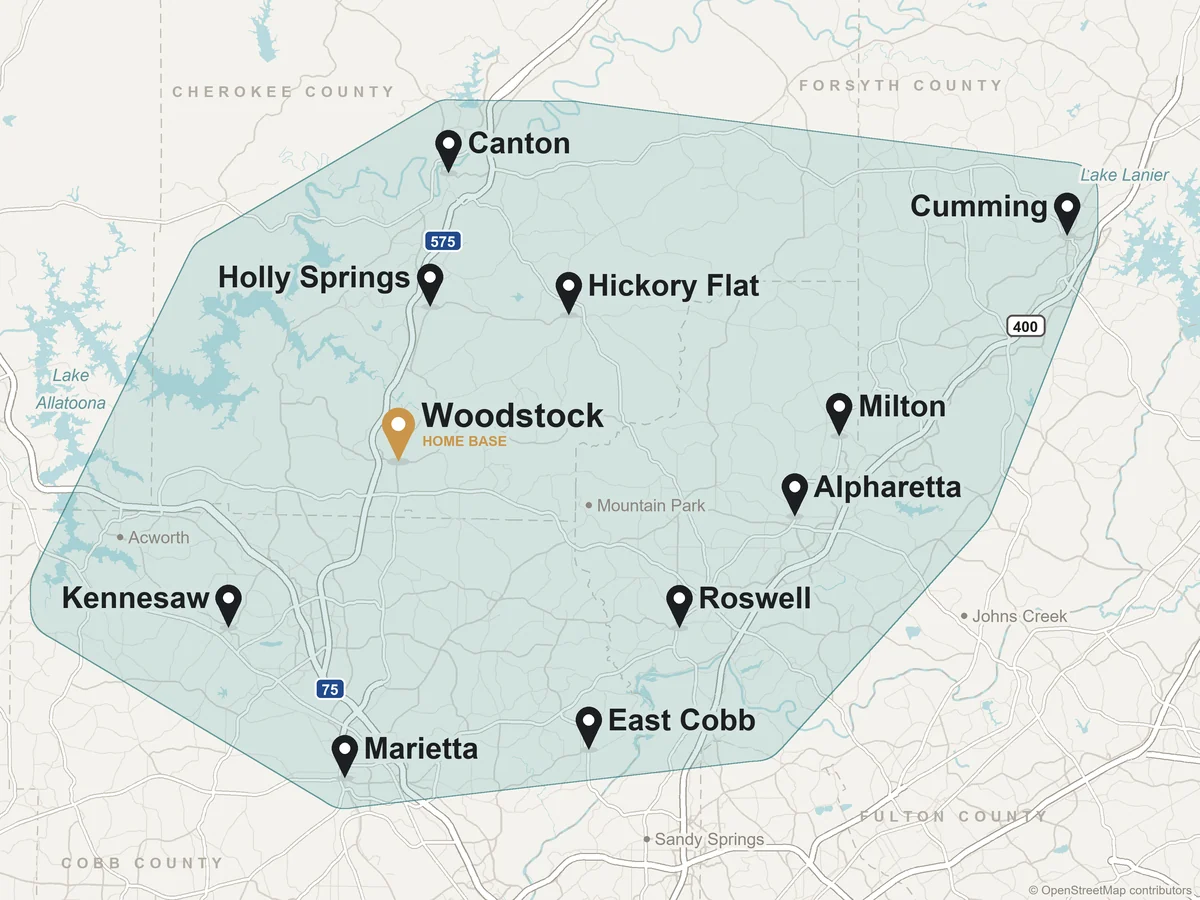
North Metro Atlanta.
We're based in Woodstock and replace siding across North Metro Atlanta, including Canton and Holly Springs. Hardboard siding went on a lot of homes built from about 1980 to the late '90s, and much of East Cobb, Marietta and Roswell was built in those years.
“Looks like a completely different home now.”